Crawlspace mold assessment in White House, TN
Work beneath a home starts with understanding the affected framing, moisture conditions, and access—not choosing a treatment from a photograph.
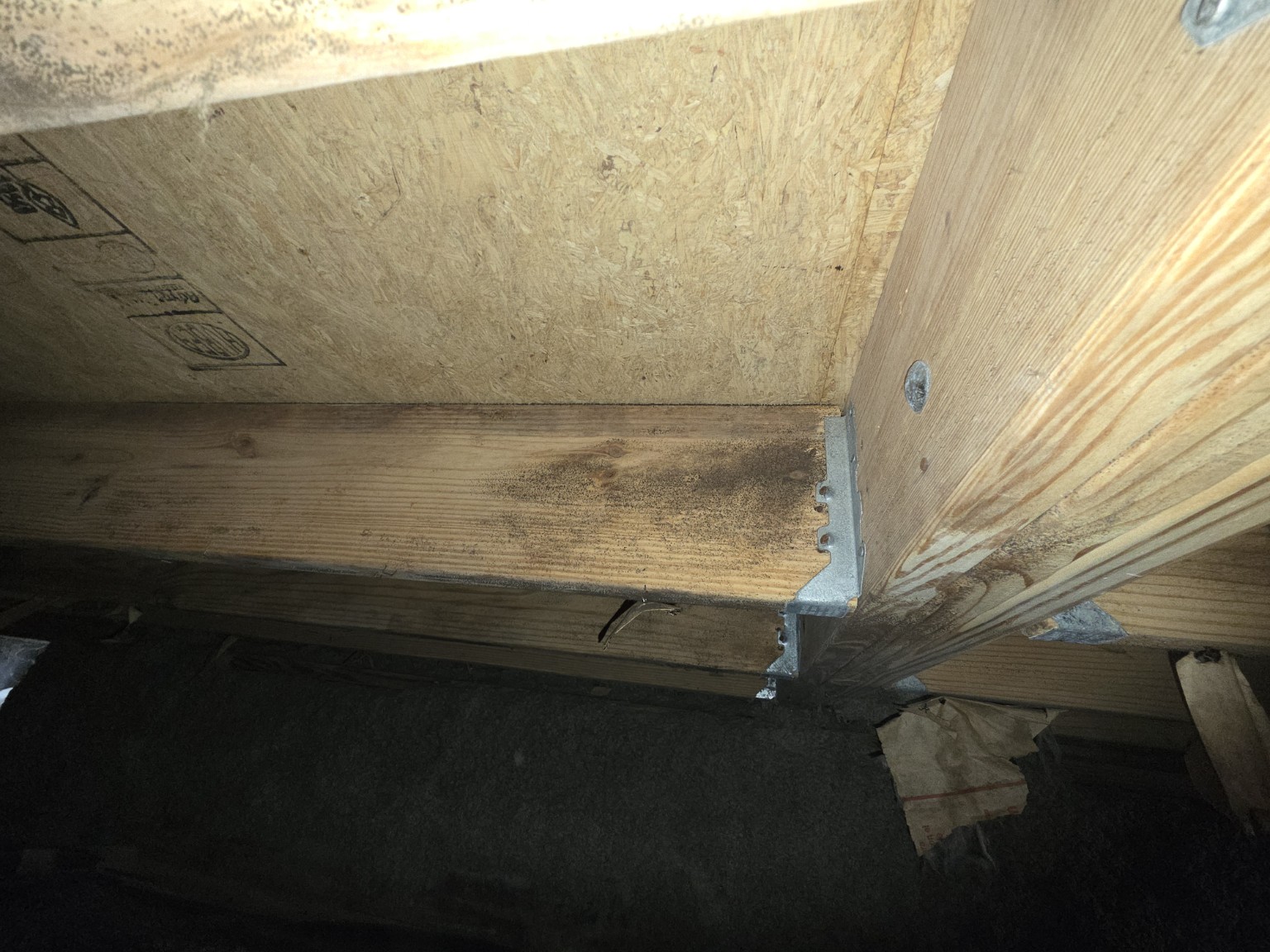
What is visible.
Jason identified these White House project conditions as crawlspace mold. The close-up photograph shows dark spotting on wood framing beneath the subfloor. A photograph documents visible conditions but cannot establish the full concealed extent or a clearance result.
What an assessment needs to establish.
For a similar concern, share the leak history, musty odors, visible growth, and whether the crawlspace has standing water or damaged insulation. An assessment helps distinguish the remediation work from drainage, plumbing, humidity control, or structural repair needs.
How the findings guide the scope.
The remediation proposal may include controlled work areas, HEPA cleaning, affected-material removal, and surface treatment appropriate to the findings. Vapor-barrier installation, insulation replacement, and framing repairs should be identified separately when needed. Addressing an ongoing moisture source is part of planning for recurrence prevention.
These notes explain photographed conditions and possible assessment needs. They do not claim unrecorded work, drying measurements, clearance testing, or completed repairs at this property.
Will treating crawlspace surfaces fix an ongoing moisture problem?
Surface treatment alone does not fix a continuing leak, drainage problem, or high humidity. We explain the remediation scope and the separate moisture-control work that may be needed.
Explore local service in White House →